Appearance and Structure
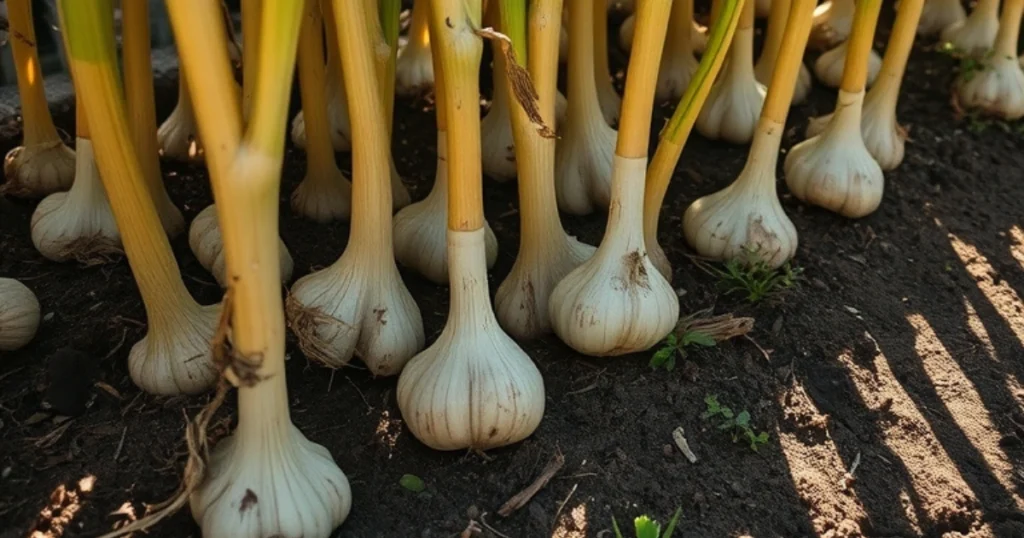
Understanding the difference between hardneck and softneck garlic really starts with how they grow – and what you see when they do. In my years as a garlic grower, I’ve come to admire the proud structure of hardneck plants, especially when their scape begins to go up from the base of the neck. This flowering stock gives them their name – hardneck – and also adds to their bold, spicy flavour. In contrast, softnecks grow in warmer climates where they don’t require the same amount of cold vernalization. The result? They develop without producing a scape, making their neck flexible and perfect for braiding. It’s not that softnecks can never form scapes — but when they do, it’s under unusual environmental conditions, like a sudden bolt in northern winters. Even then, these scapes are often weakly formed and quite short-lived.
Braiding, Growth, and Scape Formation
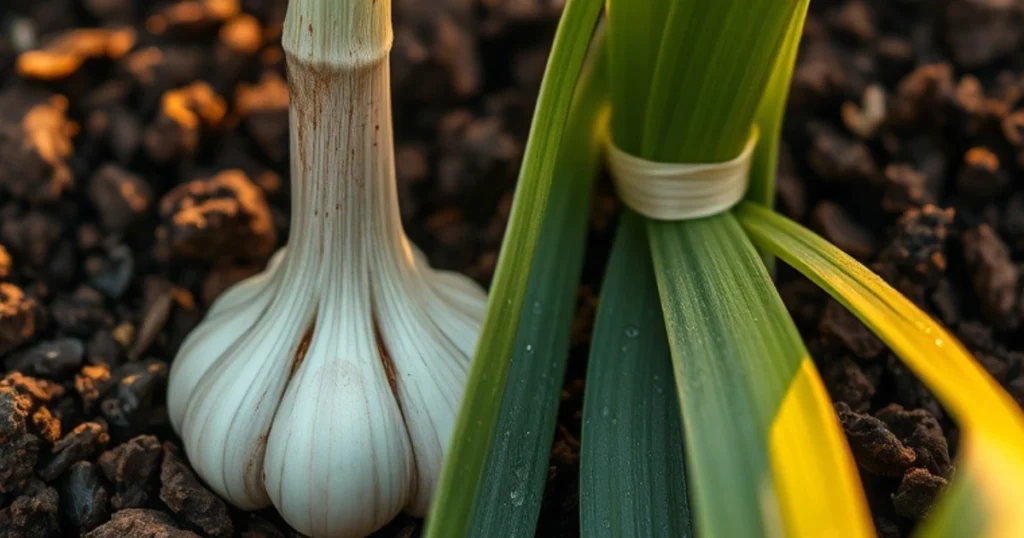
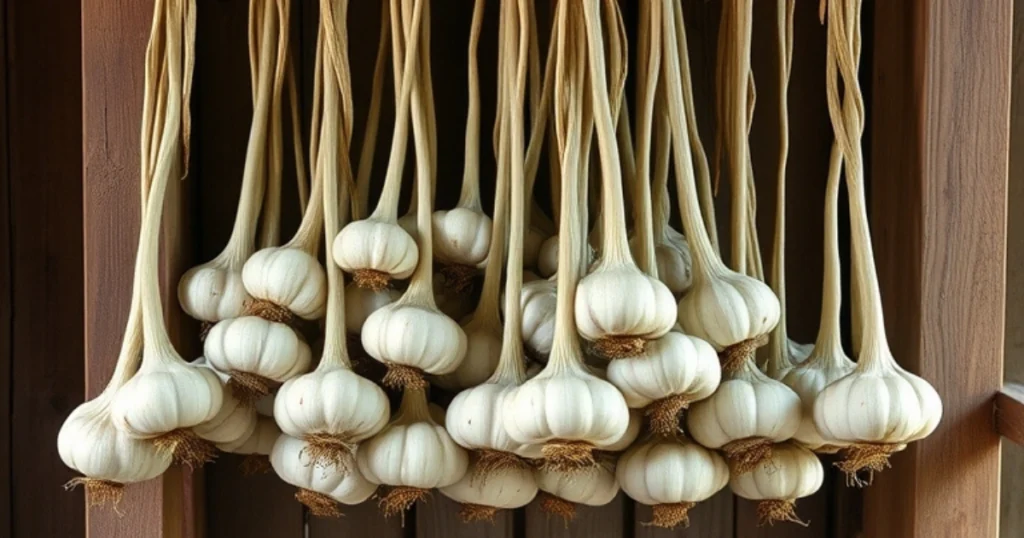
When harvested, softnecks have an edge in ease of handling. Their softer tissues, pliable stocks, and lack of a stiff central stem or scape make them easy to braid into bundles. I remember the first time I braided a long string of softnecks — they looked beautiful drying under the porch, and the garlic stayed good for months. That’s because their tight outer skins help retain moisture, allowing them to be stored longer than most hardneck types. I’ve had softnecks stay fresh for nearly a year, while hardneck varieties, even lovely porcelain types or richly colored purple ones, had to be trimmed and stored more carefully to prevent drying out. The difference really becomes clear when handling them. Hardnecks have to be crushed or trimmed before hanging, while softnecks can be braided directly, no pin needed.
That said, there’s something fascinating about how both garlics have traveled through time. Hardneck garlic closely resembles the wild crops once picked by humans thousands of years ago. Their complex, often hot and spicy flavor, with hints from sweet to strong, varies depending on the environment, family, and seasonal conditions. Softnecks, on the other hand, offer a mild, simple taste that holds up beautifully in most environments. I’ve seen them thrive across multiple climates, slowly forming tight bulbils and adapting to where they’re grown. They don’t just thrive — they’re dependable and adaptable, with characteristics that don’t always get enough admiration. Whether bundled, harvested, or stored, they remain proof that softneck garlic, even without a scape, holds just as much value in the garden as its hardneck cousin.
How to Know If Softneck Garlic Grows Scapes
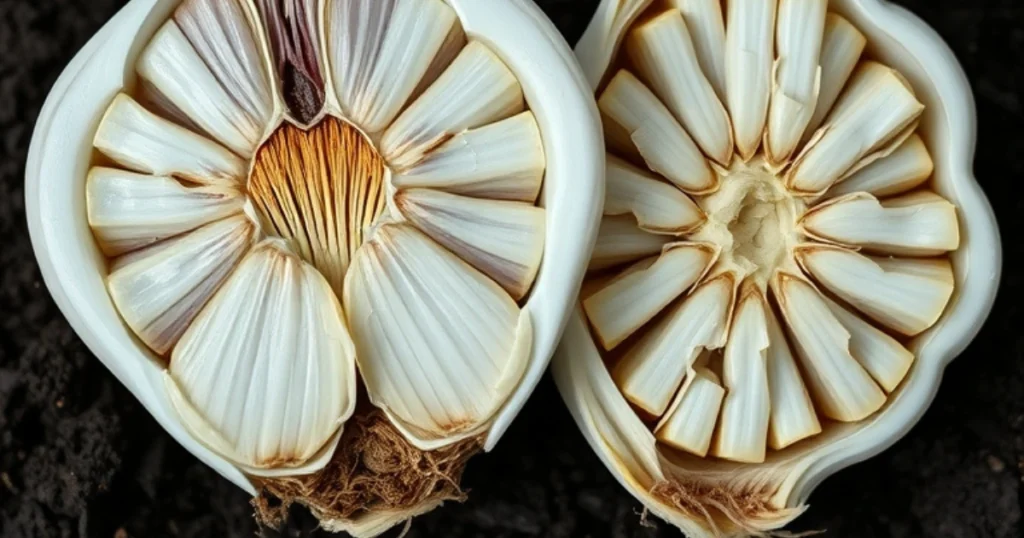
Many beginner and even experienced growers wonder, does softneck garlic grow scapes? The short answer is no — it doesn’t grow a true scape, which is a major difference from hardneck varieties. However, if a softneck plant faces sudden environmental stress, like prolonged cold or colder temperatures, it may develop a small bulbil or hardstem in the center, but this is not the same. From my own garden, I’ve seen this happen once during an unusual winter, but the plant’s reaction was weak and short-lived. One way to tell the difference is to inspect the stem. A hardneck has a central, woody, rigid stalk that sometimes feels like it’s running all the way through the neck, while softneck garlic feels more flexible and has a soft stem with no tough core. Softneck types also have multiple, smaller cloves, stacked in layers, compared to the large single ring found in hardnecks. These traits not only help in identifying them but make softneck garlic more suitable for braiding, especially when dried.
Final Thoughts
If you’re wondering when to harvest garlic, especially softneck, follow what I call “the leaning rule.” When about a third of the leaves turn yellow or brown, and the stems start to fall or lean, similar to how an onion behaves at maturity, it’s time to pick. These are indicative signs that the bulb is mature. In some cases, even rust appearing on the leaves can be a subtle cue. Softneck doesn’t require cold exposure, so it thrives better in warmer, milder varieties of climates, where it also tends to mature more quickly compared to hardnecks. I’ve found that this type is especially practical for beginners since they’re easier to grow, don’t bolt as often, and can be produced reliably each season. And thanks to their typical shape and soft neck, they differ from hardneck just by touch. Each plant’s maturity, clove arrangement, and visible characteristics can help you differentiate them, whether you’re out in your garden or checking fresh Allium sativum at the market — no guide needed.